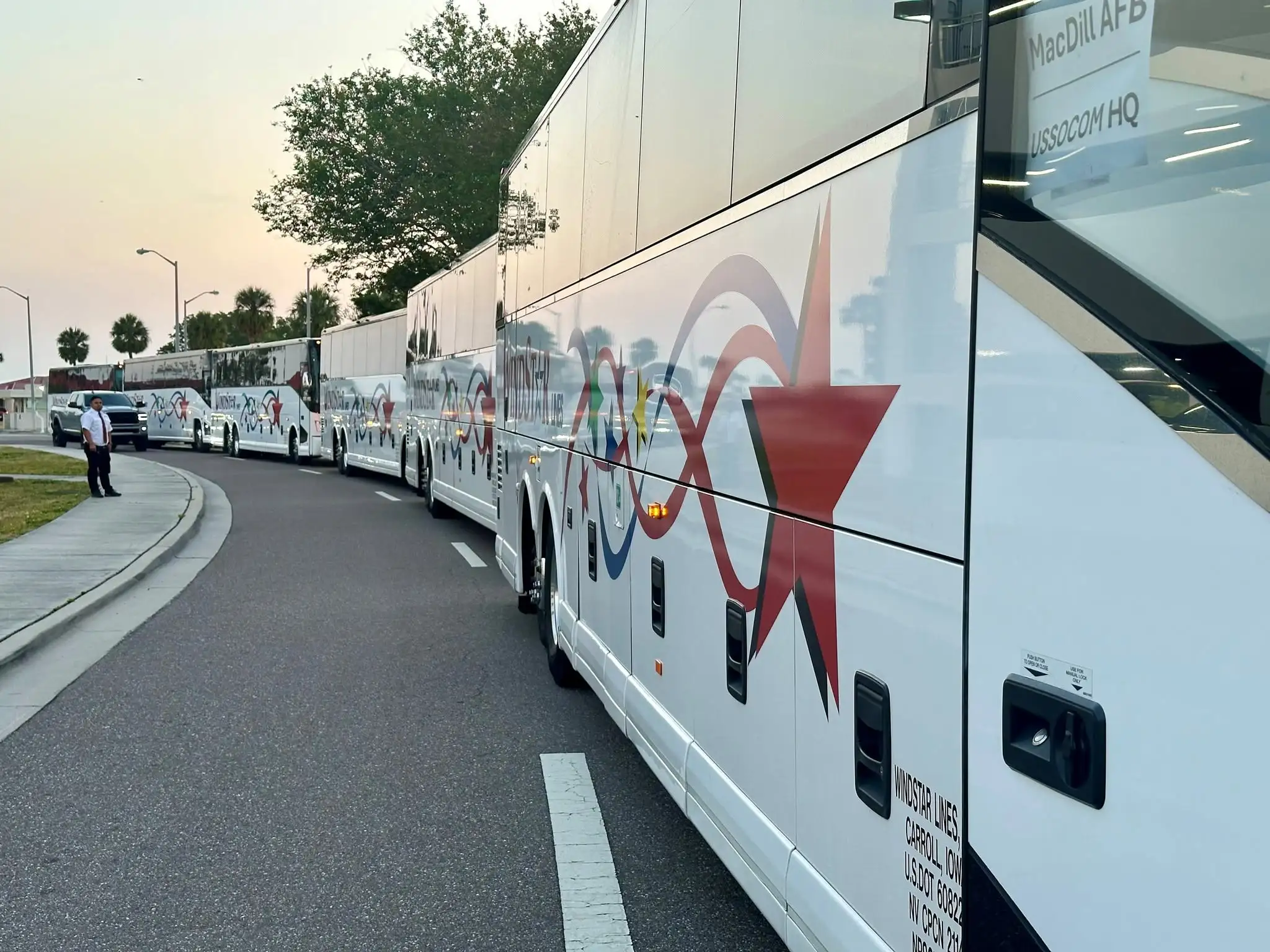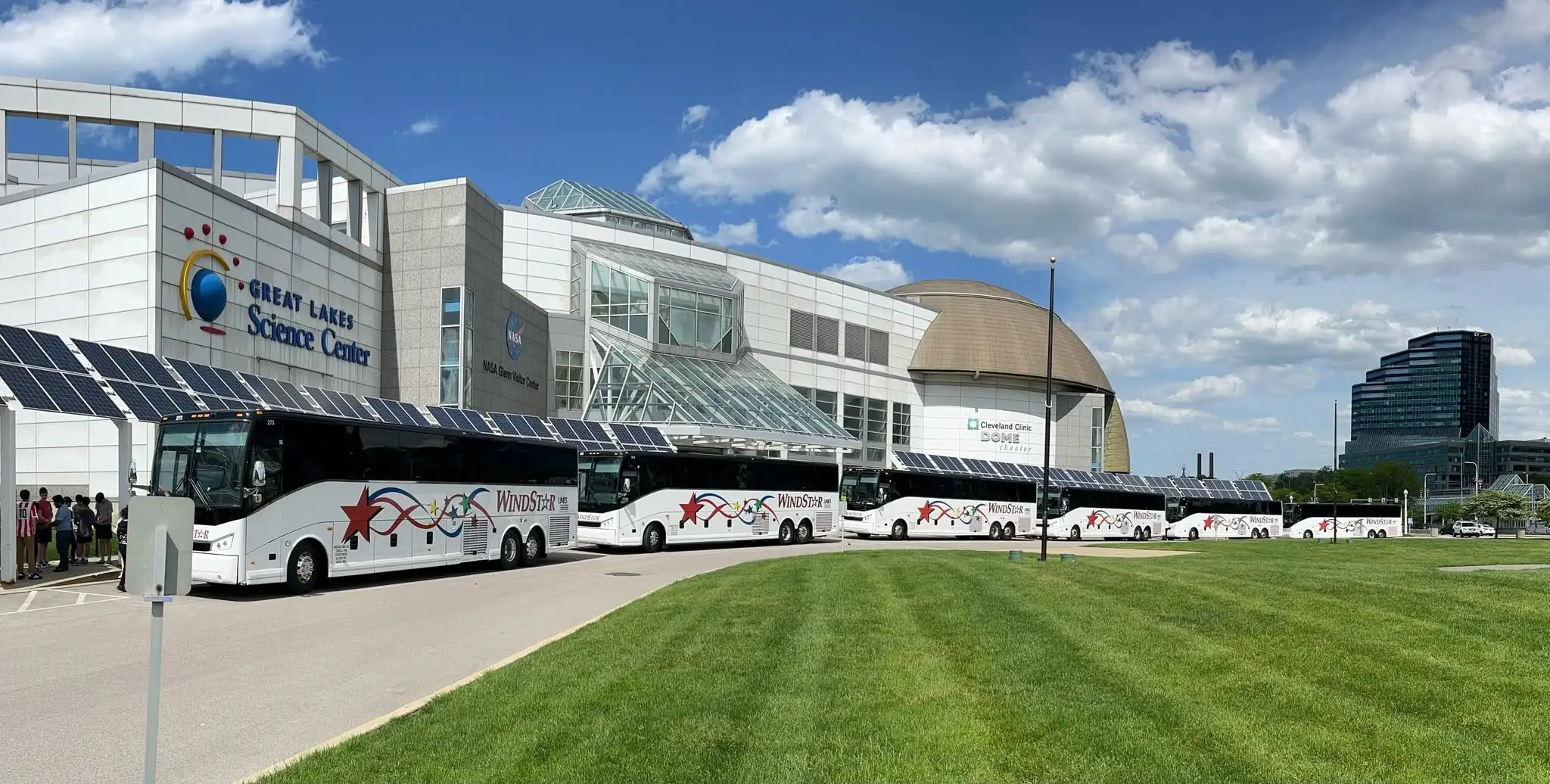
Planning transportation for a corporate conference requires aligning attendee arrival timelines, estimating peak movement surges, selecting the right mix of executive minibuses and full-size motorcoaches, and coordinating curbside staging. A structured ground transit plan eliminates airport delays, prevents morning keynote bottlenecks, and keeps attendees focused on the event agenda.
Ground logistics are often the first and last touchpoint of an attendee’s conference experience. When airport transfers fall through, hotel shuttle loops back up, or buses get stuck in downtown traffic, whole conference schedules slip, keynote halls sit half-empty, and executive leadership notices.
Whether you are hosting 150 regional managers or coordinating transit for 3,000 national delegates, effective event transportation relies on operational formulas rather than guesswork.
1. Map the Core Transit Flows
Corporate conference transportation breaks down into three operational stages:
- Airport Ingress & Egress: Moving arriving attendees from regional or international terminals to designated conference hotel blocks over a 24- to 48-hour window.
- Daily Hotel-to-Venue Shuttles: Continuous or high-frequency loops transporting guests between satellite lodging properties and the primary convention facility.
- Off-Site Event Sweeps: High-capacity, mass-movement windows transporting delegates to off-site dinner receptions, awards galas, or networking venues simultaneously.
2. Calculate Fleet Needs Using the Peak Volume Formula
Never size your vehicle needs based on average daily attendance. Fleet size must be calculated around peak 60-minute movement windows—typically the 75 minutes prior to morning general sessions and the 45 minutes immediately following evening keynotes.
Use the standard conference transit equation to estimate vehicle counts:
Vehicles Needed = Peak Passengers Per Hour ÷ (Vehicle Capacity × Trips Per Hour)
Where Trips Per Hour = 60 ÷ Round-Trip Cycle Time (in minutes)
- Round-Trip Cycle Time: Total minutes required for loading at Hotel A, transit, unloading at the Convention Center, and returning to Hotel A.
- Buffer Rule: Add a 15% to 20% dwell-time buffer to account for traffic lights, wheelchair-lift operations, and attendee boarding delays.
3. Right-Size the Fleet: Minibuses vs. 56-Passenger Coaches
Selecting the wrong vehicle type leads to wasted budget on empty seats or extreme curbside wait times.
|
Transit Use Case |
Primary Vehicle Class |
Passenger Capacity |
Luggage Space |
Key Advantage |
|
Airport Arrival Sweeps |
Executive Minibus |
24–36 Seats |
Rear cargo hold / parcel racks |
Nimble terminal curbside pickup; efficient for staggered 20-minute flight arrivals. |
|
Main Hotel Loop |
56-Passenger Motorcoach |
Cavernous undercarriage bays |
Maximum throughput per driver; clears crowded hotel lobbies rapidly before morning sessions. |
|
|
VIP & Speaker Transport |
Executive Sprinter Van |
8–14 Seats |
Small rear trunk |
Dedicated on-demand point-to-point service for keynote presenters and board executives. |
|
Evening Reception Sweeps |
Combined Fleet |
Scaled to Total Headcount |
Not required |
Staggered departure waves to evacuate the main hall in under 30 minutes. |
4. Curbside Logistics, Permits, and Signage
A flawless dispatch schedule fails if the physical staging environment is poorly managed:
- Secure Commercial Curb Permits Early: Standard charter buses cannot stage in taxi lanes or private car drop-off bays. Coordinate with municipal parking authorities and venue management at least 60 days prior to designate official loading zones.
- Isolate Passenger Queuing: Separate shuttle boarding lines from general pedestrian traffic, taxi lines, and rideshare waiting areas using branded stanchions and clear route signage.
- Station Dedicated Ground Dispatchers: Place on-site coordinators with radios at both the hotel pickup hubs and convention center staging lanes. Dispatchers manage boarding headways, prevent buses from “bunching,” and communicate real-time delays to the event control desk.
Frequently Asked Questions (FAQ)
How far in advance should we book charter transportation for a conference?
For national or multi-hotel conventions, secure charter contracts 6 to 9 months in advance. Peak convention seasons (spring and autumn) create severe commercial vehicle shortages in major metropolitan markets, which can limit vehicle availability and increase rates.
What amenities are essential for corporate conference shuttles?
Executive attendees expect productivity amenities. Prioritize modern fleets equipped with onboard Wi-Fi, 110V household outlets or USB ports at every row, climate control, and PA systems for running sponsor announcements or event orientation briefings.
How should conference airport shuttles be scheduled for staggered arrivals?
Rather than scheduling individual pickups for every attendee, analyze the master flight manifest to identify high-density arrival banks (e.g., 11:00 AM–1:00 PM and 3:00 PM–5:00 PM). Schedule 24- to 36-passenger executive minibuses to run continuous 20- to 30-minute sweeps between airport commercial terminals and conference hotels during those windows.
What happens if an off-site evening reception runs late?
Ensure your transportation contract includes a defined overtime clause and flexible standby terms. Lead dispatchers should coordinate directly with the event producer during the evening to adjust final departure sweeps dynamically rather than enforcing a hard cutoff.
Streamline Your Corporate Event Transportation
Planning conference transit doesn’t have to mean guessing fleet sizes or worrying about curbside delays. Whether you need a dedicated loop of executive minibuses for airport transfers or high-capacity 56-passenger motorcoaches to move hundreds of delegates between downtown venues, our team coordinates routes, schedules, and on-site logistics so your event runs seamlessly from keynote to closing reception. Contact our team today to get started.