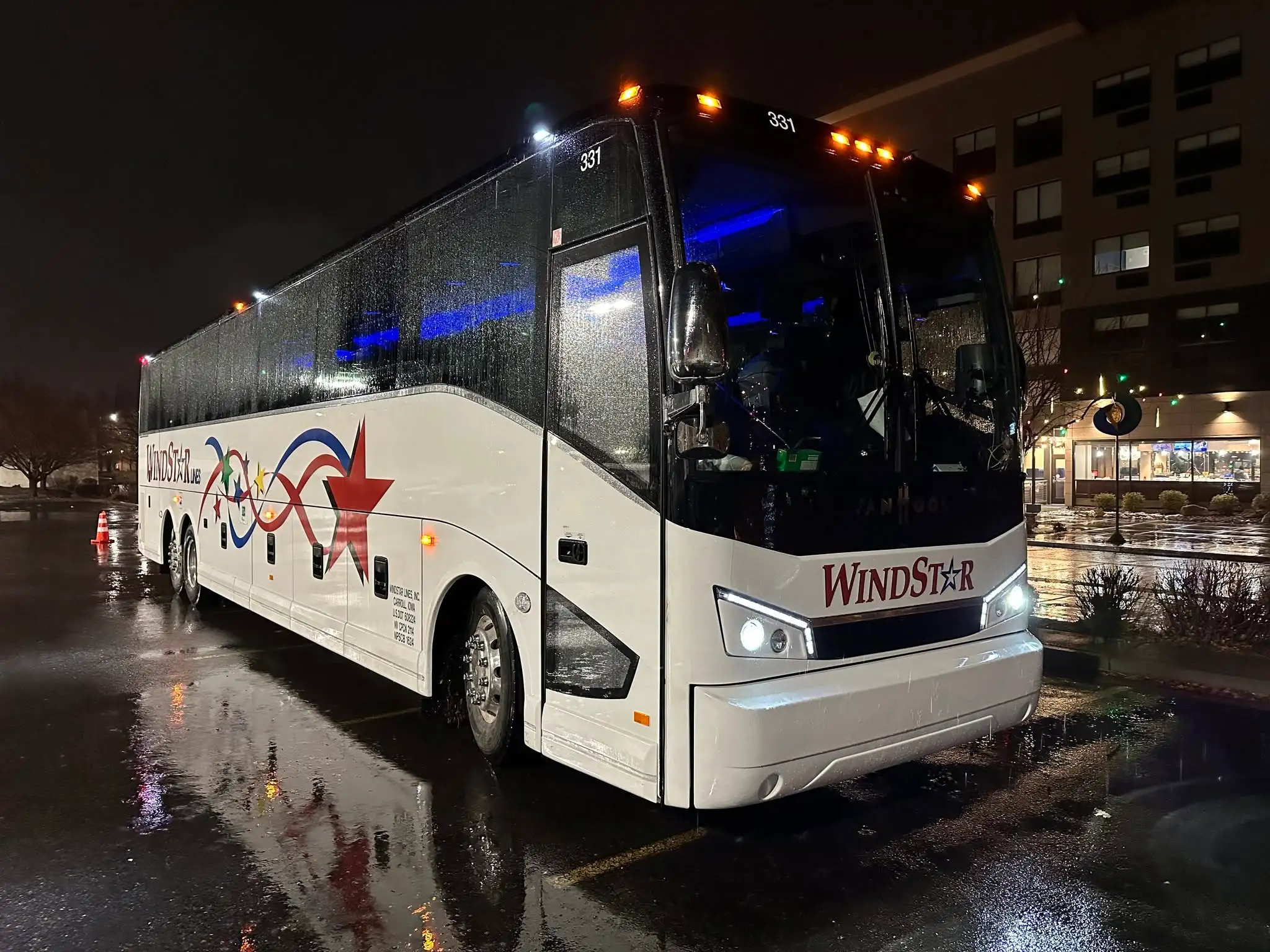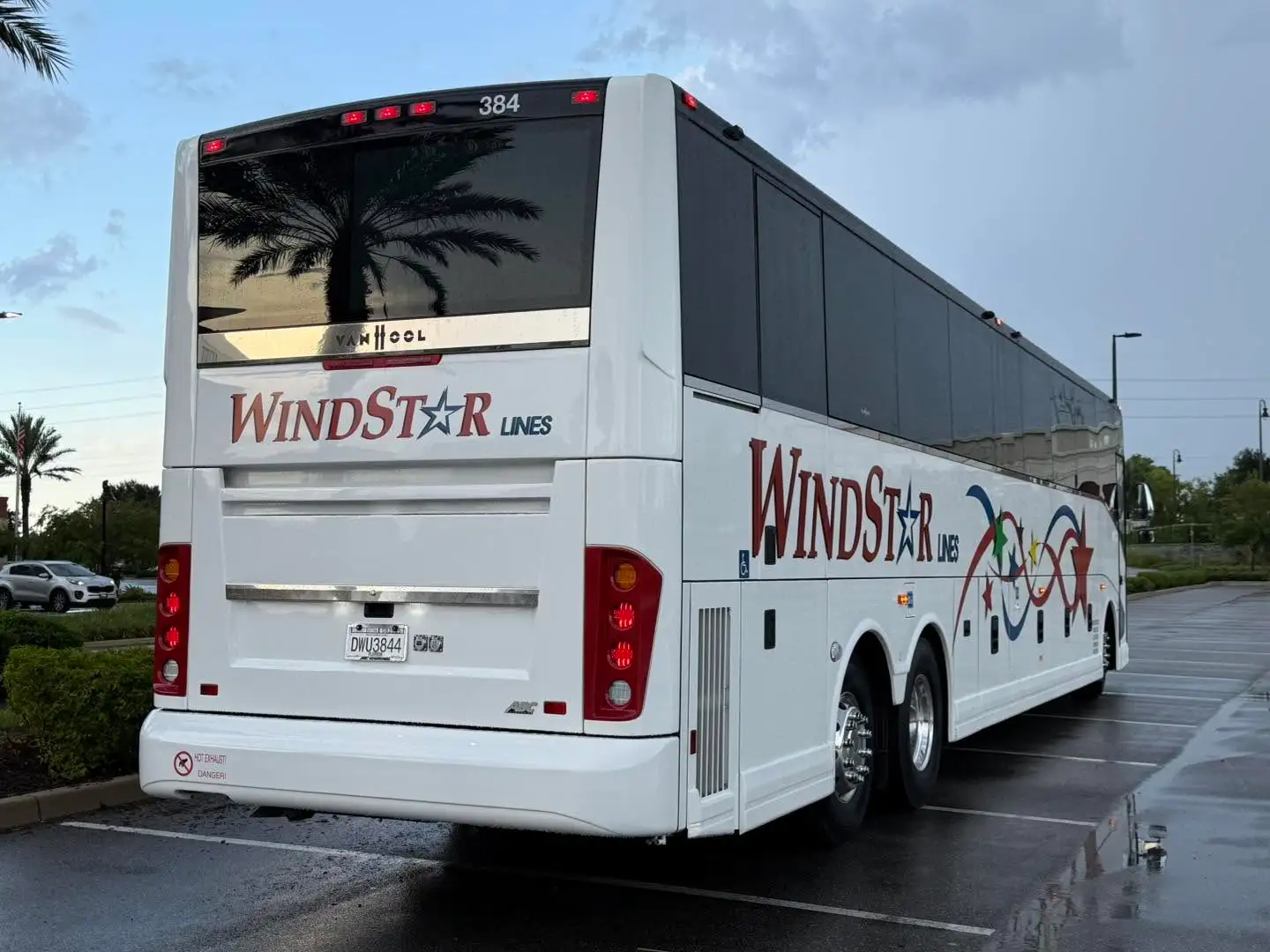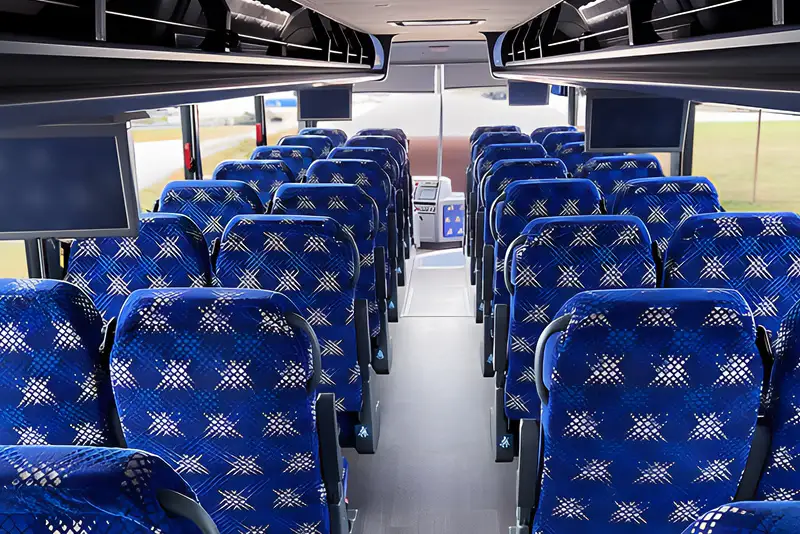
Choosing between a minibus, full-size motorcoach, and VIP coach depends on passenger volume, trip distance, and luggage requirements. Minibuses excel at short regional shuttles under 36 passengers without undercarriage storage. Full-size 56-passenger motorcoaches provide essential underfloor bays and onboard restrooms for long-distance highway travel, while VIP sleeper coaches offer bunks and lounge workstations.
Direct Fleet Comparison Matrix
|
Vehicle Class |
Passenger Capacity |
Typical Luggage Capacity |
Onboard Restroom |
110V / USB Outlets |
Best Use Cases |
|
Executive Minibus |
24–36 Seats |
Overhead parcel racks + small rear hold (15–20 small bags) |
Rare / Optional |
At select rows or USB ports |
Airport loops, corporate campus shuttles, local wedding guest transfers, dinner venues |
|
Full-Size Motorcoach |
54–56 Seats |
Substantial undercarriage belly bays (1–2 large suitcases per passenger) |
Standard (Flush toilet + sink) |
Standard (110V outlets or dual USB at every pair of seats) |
Regional team travel, multi-day band tours, cross-state charters, shift transportation |
|
VIP / Sleeper Coach |
8–18 Passengers (Bunk layout) |
Deep rear luggage trunk + under-bay gear storage |
Standard (Full private restroom) |
Standard throughout (110V outlets at each bunk + lounge stations) |
Concert tours, executive corporate retreats, overnight athletic transfers |
When to Choose Each Vehicle Class
When to Choose an Executive Minibus (24–36 Passengers)
- Short Run Radiuses: Ideal for operations within a 30- to 60-minute radius where passengers do not require an onboard restroom.
- Tight Physical Footprints: Urban hotel driveways, historic downtown street grids, and tight manufacturing plant loading circles where a 45-foot coach cannot easily pivot.
- Cost-to-Seat Efficiency: Avoids paying for unneeded empty seats when transporting smaller athletic squads or corporate breakout groups.
When to Choose a Full-Size 56-Passenger Motorcoach
- Interstate & Highway Corridors: Built on heavy air-ride suspension, providing stability and passenger comfort on routes like Des Moines to Chicago or Omaha to Kansas City.
- Bulky Baggage & Equipment: Essential for football/hockey gear, musical instruments, trade show crates, or multi-day luggage that won’t fit in passenger aisles.
- Continuous Transit Comfort: Onboard restrooms eliminate the need to make unscheduled stops at highway service plazas for large groups.
When to Choose a VIP or Sleeper Coach
- Overnight Road Travel: Allows teams, touring artists, or executive teams to travel overnight and arrive at morning job sites or venues rested.
- Productivity Hubs: Features front/rear lounges, galley kitchens, flat-panel displays, and AC shore-power hookups for in-transit presentations.
Key Logistics & Booking Checklist
- Count Passengers Accurately: Never book exactly at maximum capacity; leaving 2–4 open seats accommodates unexpected staff, gear overflow, or driver gear.
- Account for Luggage Real Estate: Sports equipment bags count as 1.5 standard suitcases; if 35 athletes travel with duffel bags and coolers, opt for a 56-passenger coach instead of an overloaded minibus.
- Verify Power and Connectivity: Confirm onboard Wi-Fi bandwidth requirements for business travelers planning to work in transit.
- Driver Hours of Service (HOS): Single-driver trips are capped by FMCSA at 10 hours driving / 15 hours on-duty; overnight routes or runs over 550 miles require a relief co-driver team.
FAQ’s
Does a minibus have an onboard bathroom?
Answer: Most standard 24- to 36-passenger minibuses do not have onboard restrooms in order to maximize interior seating capacity. If your itinerary involves routes exceeding 60 to 90 minutes without planned rest stops, booking a full-size 56-passenger motorcoach is recommended because a self-contained private restroom comes standard.
How much luggage fits on a 56-passenger charter bus?
Answer: A standard 56-passenger motorcoach features cavernous pass-through undercarriage luggage bays providing approximately 500 cubic feet of cargo space. This accommodates one large checked suitcase (up to 50 lbs) and one carry-on bag per passenger, with additional overhead parcel bins inside the cabin for coats and small personal items.
Are power outlets and Wi-Fi included on all charter buses?
Answer: Modern commercial motorcoaches and executive minibuses typically feature 110V household outlets or high-speed USB ports at every row, alongside cellular-based onboard Wi-Fi for web browsing and email. Always verify specific connectivity packages at the time of your reservation to ensure electrical requirements for laptops or presentation equipment are met.
What is the difference between a charter bus and a VIP sleeper coach?
Answer: A standard charter bus features forward-facing high-back seats designed for day trips and regional group transportation up to 56 passengers. A VIP sleeper coach replaces dense rows of seating with 8 to 18 private sleeping bunks, front and rear lounge seating, a kitchenette, and entertainment stations designed specifically for overnight touring.